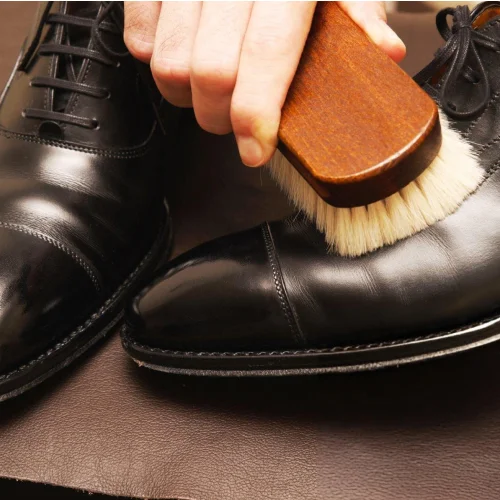
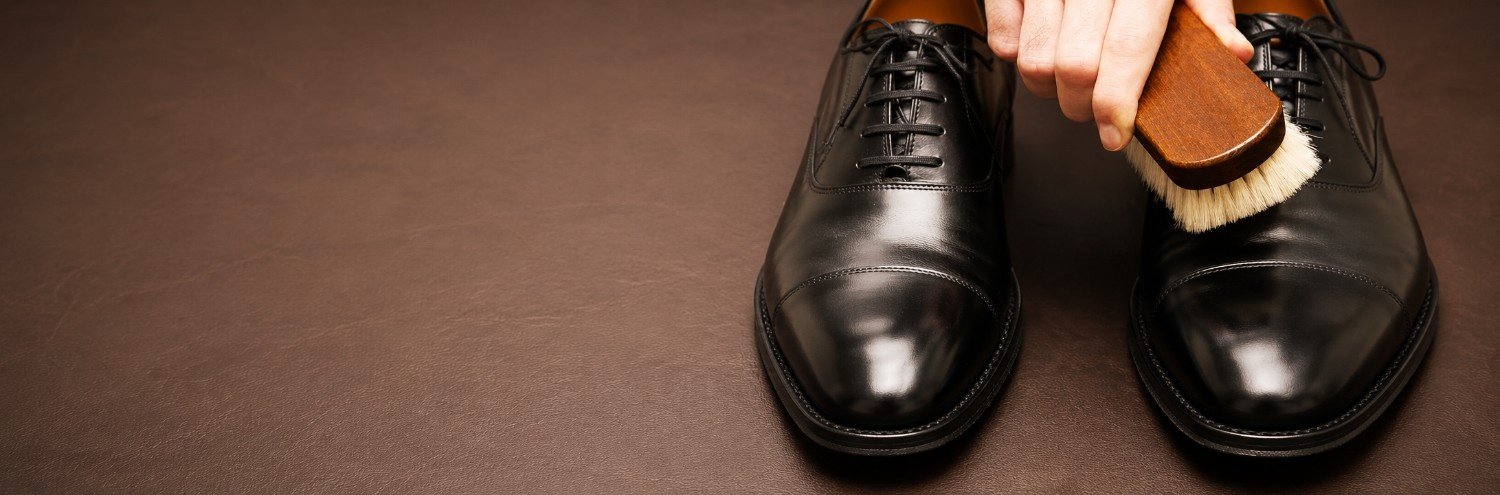
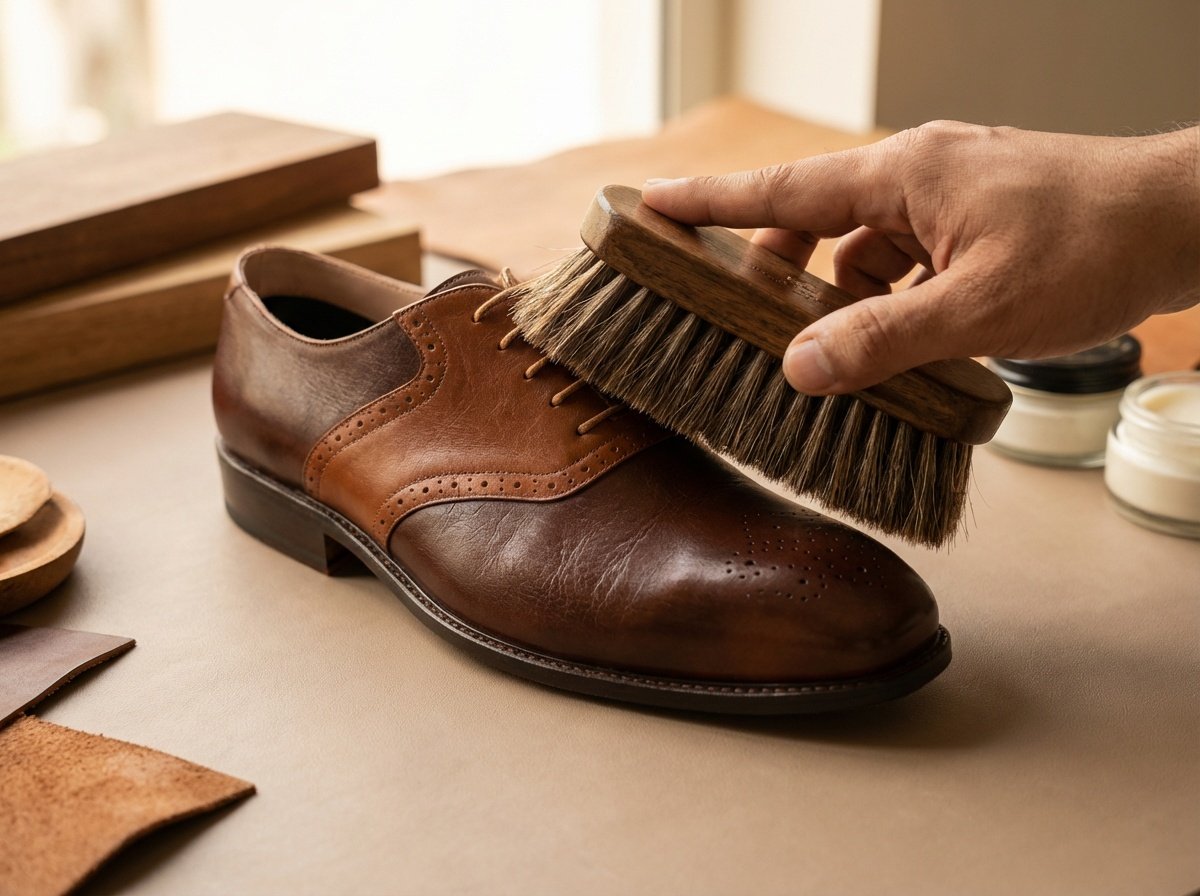
After each wear, gently remove dust and surface debris with a soft horsehair brush or a clean dry cloth. This simple step prevents dirt from settling into the leather grain and dulling its natural finish.
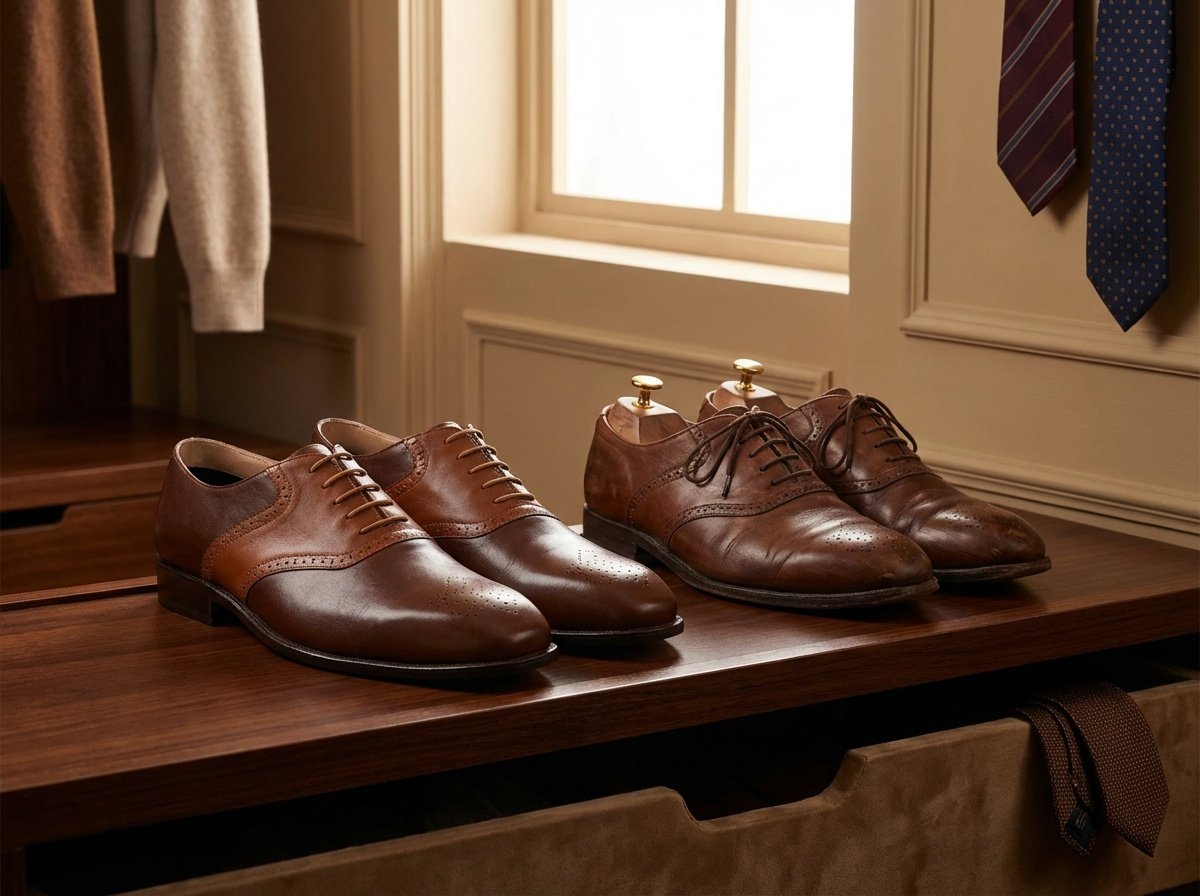
Always allow your shoes time to rest between wears. Fine leather needs time to breathe and release retained moisture, and regular rotation helps reduce premature creasing while preserving comfort and shape.
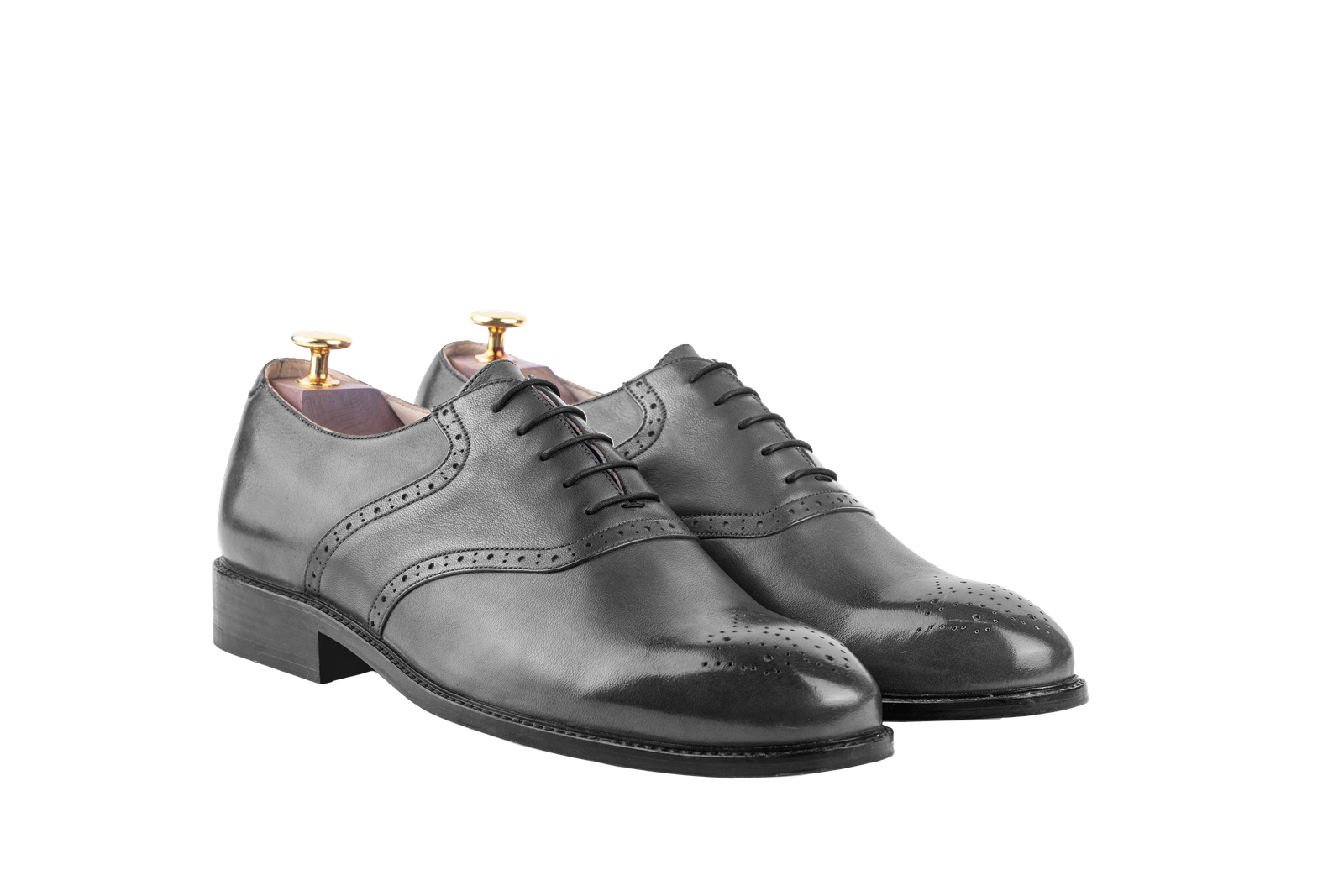
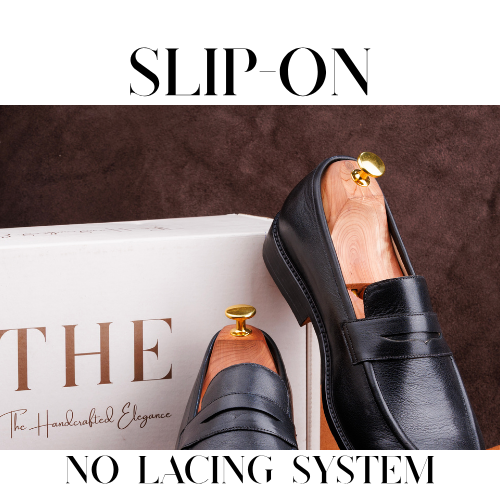
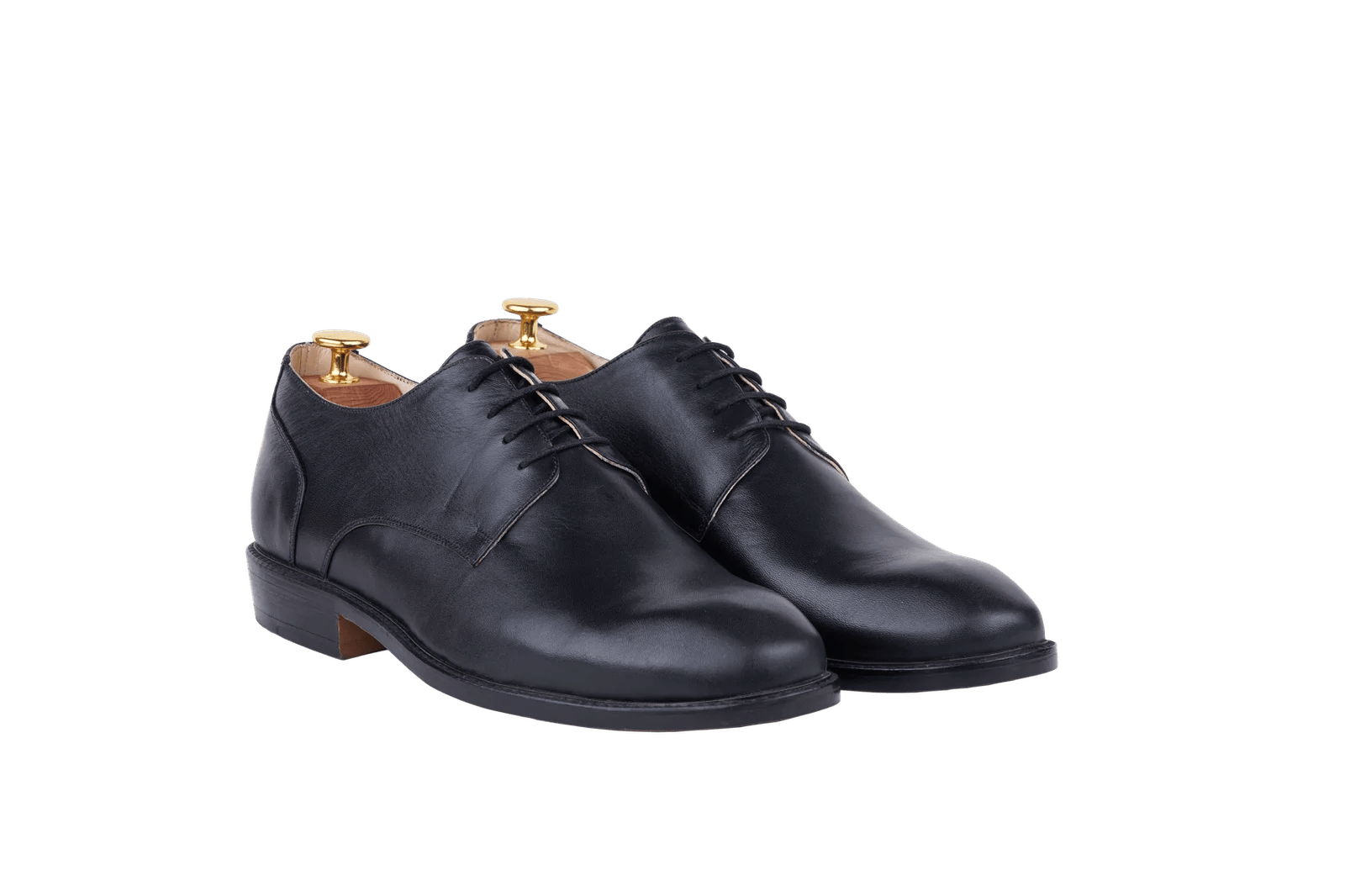
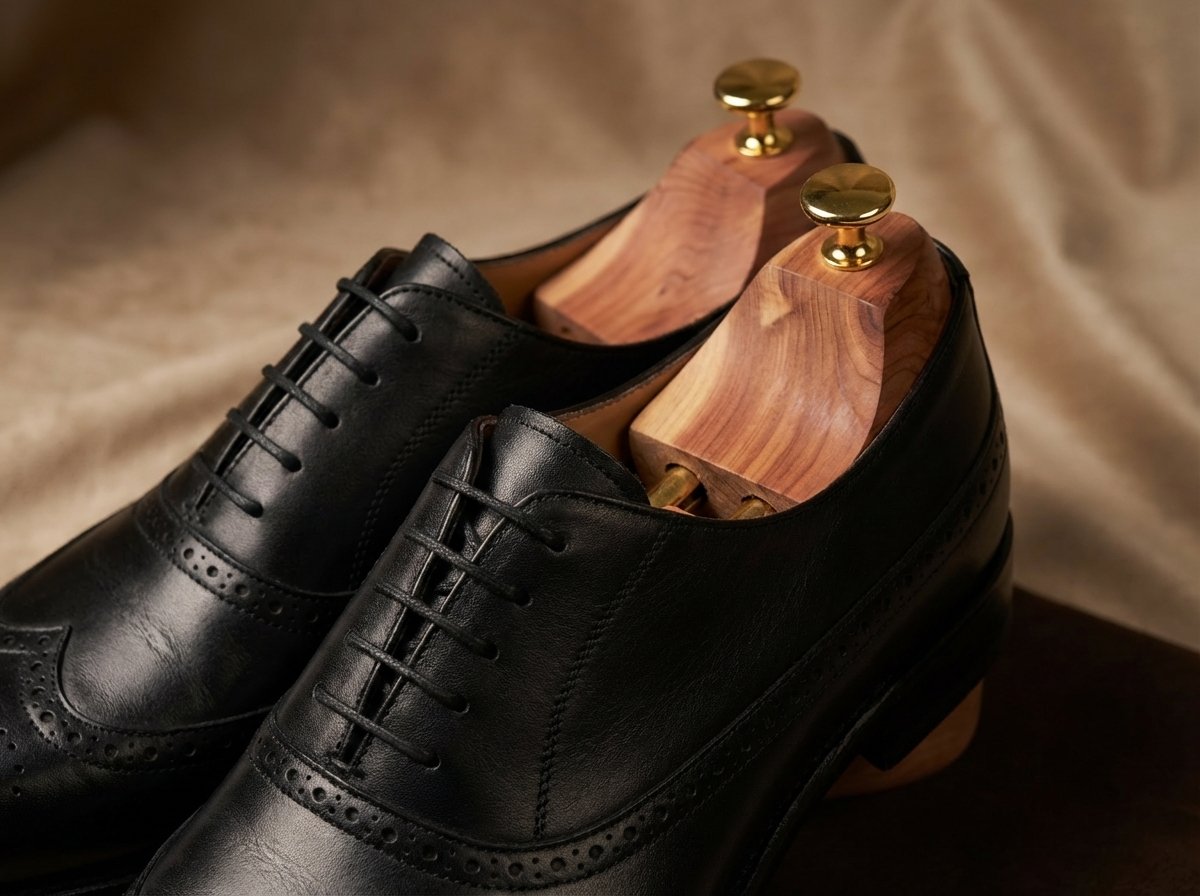
Insert a shoe tree immediately after wear whenever possible. A well-fitted wooden shoe tree helps maintain the silhouette of the shoe, softens creasing across the vamp, and absorbs internal moisture that would otherwise weaken the leather and lining over time.
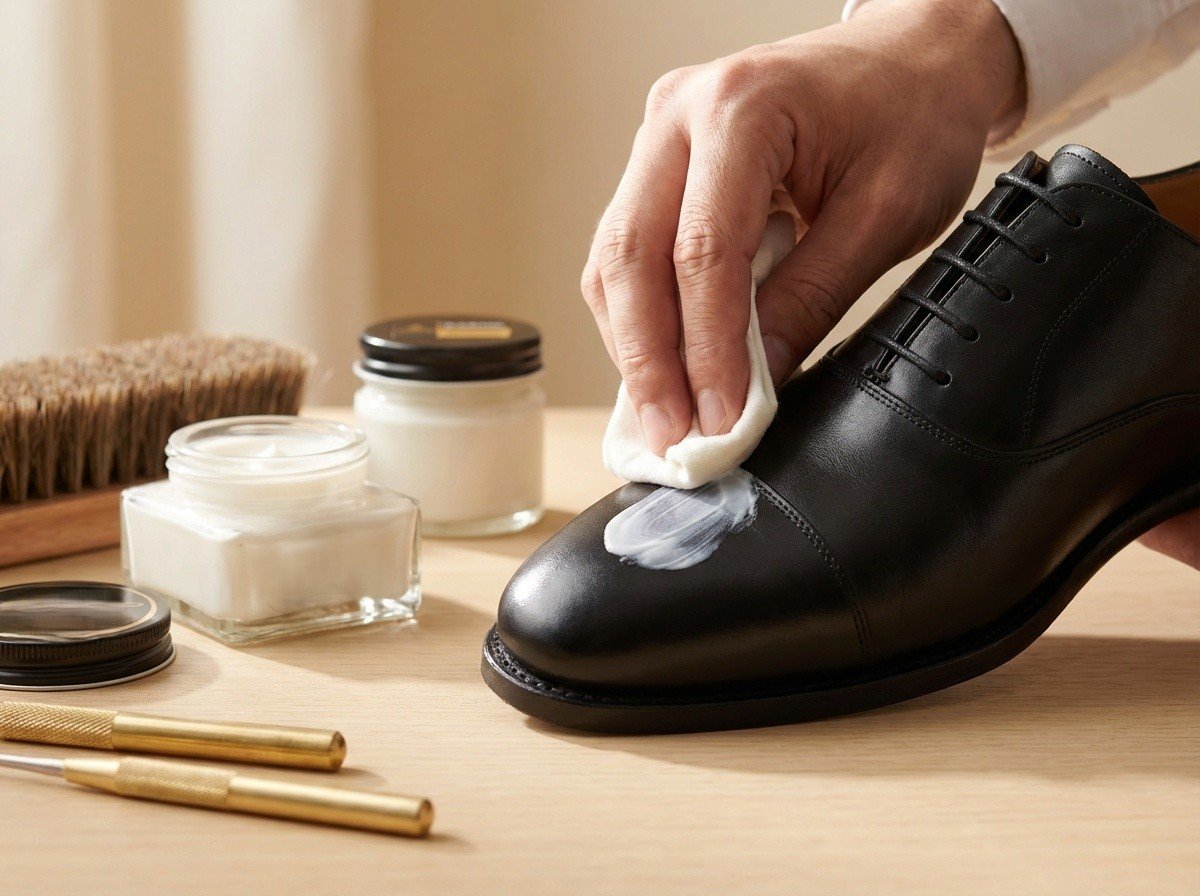
Use a shoe moisturiser regularly to keep the leather supple, nourished, and resilient. This may be a high-quality conditioning cream or leather lotion applied lightly and evenly with a soft cotton cloth. Proper moisturising prevents the leather from drying, stiffening, or developing fine cracks with age.
When applying cream or moisturiser, work in small circular motions rather than broad sweeping strokes. Thin, even layers allow the product to penetrate properly and condition the leather more effectively without overloading the surface.
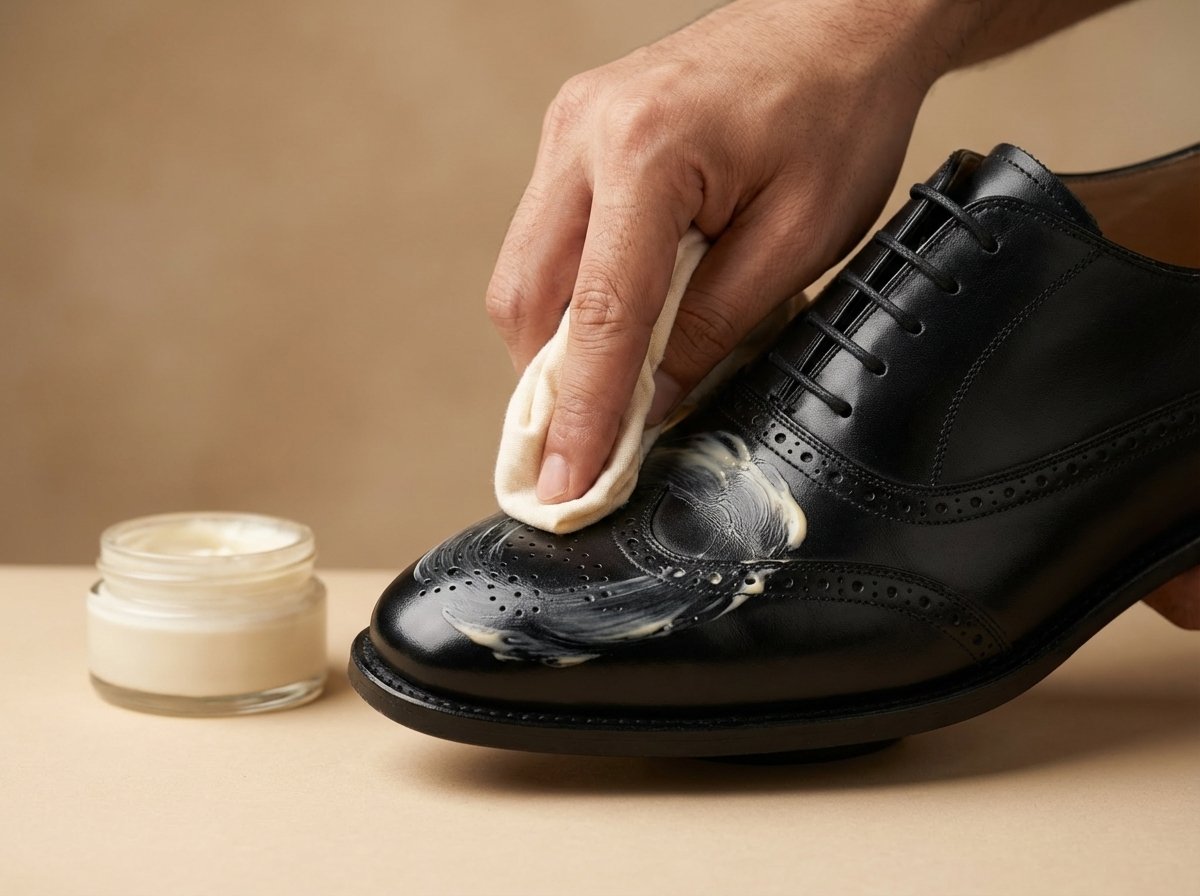
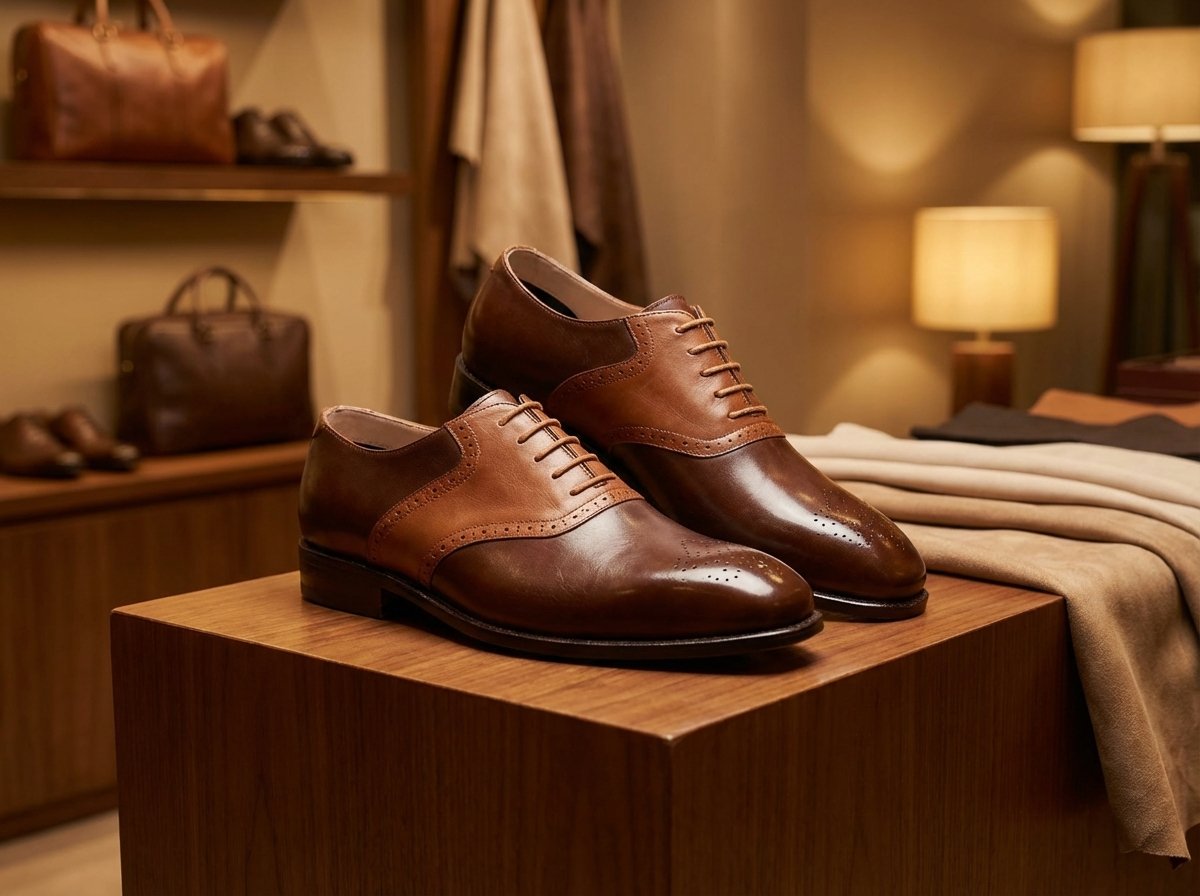
Once conditioned, the shoe may be finished with a polish to restore colour, depth, and refinement. For the most elegant result, we recommend a natural wax polish, ideally a carnauba- or beeswax-based formula, used sparingly on the to
Wax should be applied with restraint, especially on areas that flex heavily such as the vamp and quarters. Concentrating polish on the toe and heel preserves a refined finish while avoiding cracking in the crease points.
Allow each layer of cream or wax to settle before brushing or adding more product. Fine leather responds best to patience: a few light applications, properly dried between coats, will always outperform one heavy application.
Use a soft brush or cotton cloth for the final buff. This last touch revives the surface, removes any excess product from the creases, and brings out the understated glow that defines well-kept luxury footwear.
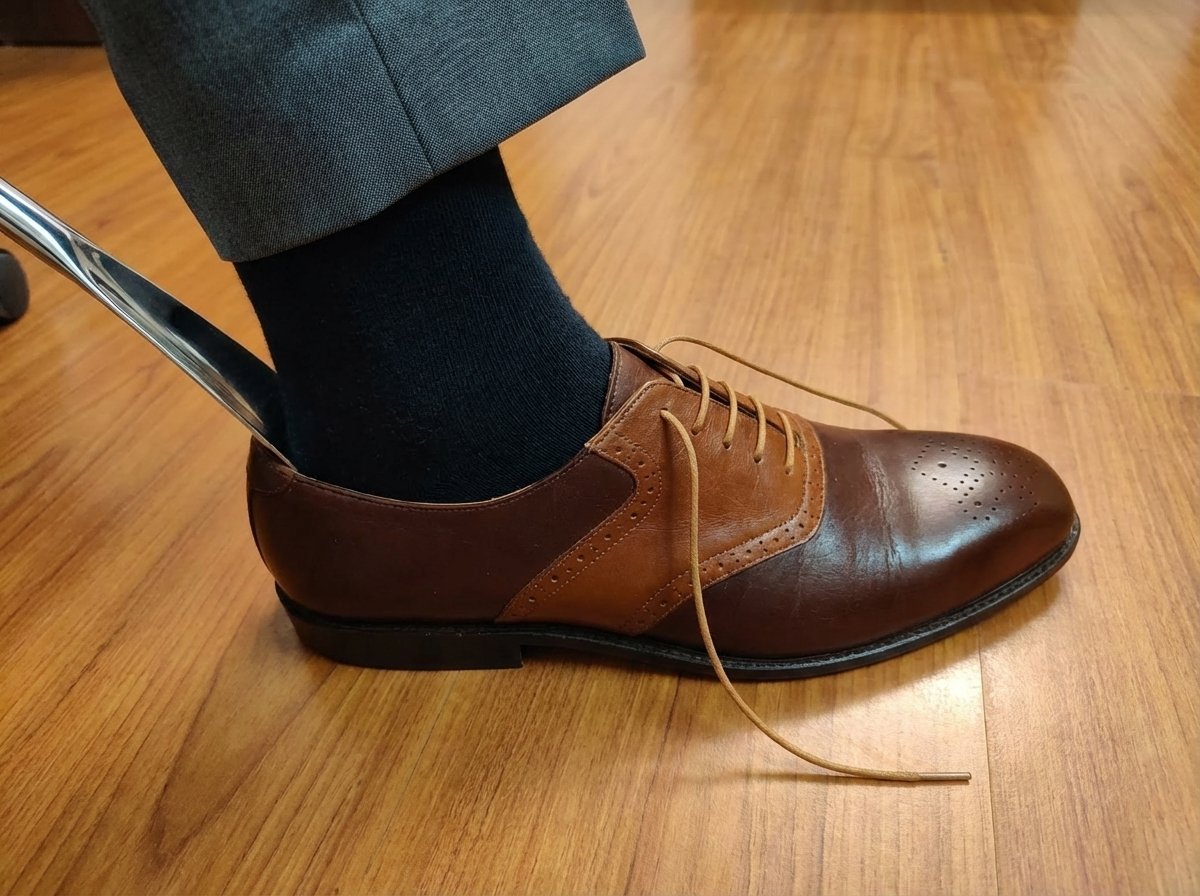
Whenever putting on your shoes, use a proper shoe horn. It protects the heel counter, preserves the structure at the back of the shoe, and prevents unnecessary distortion over years of wear.
Never force-dry fine shoes near radiators, fireplaces, heated floors, or direct sunlight. Leather should always dry naturally, as excessive heat strips essential oils from the hide and can lead to hardening, brittleness, and irreversible cracking.
Final Notes
Leather shoes offer a timeless combination of elegance, comfort, and character. But they rely on your attentive care to reach their full potential. These steps honor the craftsmanship behind each pair, preserving their beauty and resilience—and turning them from shoes into lifelong companions.
By integrating this care routine—cleaning, nourishing, shining, brushing, protecting, and storing—you elevate not only your footwear but also the story they carry. This is more than maintenance; it’s a practice of refinement and attention to detail that defines The Handcrafted Elegance.
Let your shoes walk gracefully with you—and may your steps always reflect the dedication behind them.
Before you get started
A Few Additional Tips.
Tip-1
Use Shoe Tree - Using wooden shoe trees will help to absorb moisture and maintain the shape of the shoes as they dry out. Using a shoe horn prevents damage to the heels, counter and top line.
Tip-2
Chamois Leather - After a quick buff with a cotton cloth, use a chamois leather (well used if possible). Chamois have an oily feel to them and present the softest type of material to achieve the highest possible shine without going to the trouble of Mirror Shine / High Shine / Bulling.
Tip-3
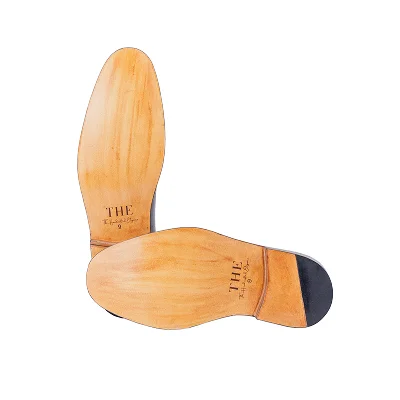
Wax Crayon - During the manufacturing process, we ink stain and wax set the sole edges to increase water resistance. As one can imagine, soles take the most abuse during wear, coming into contact with hard surfaces regularly. At home, you can use a hard wax crayon to apply a similar colour wax to the edges where any raw fibres from the leather welt or sole are visible or where the factory wax has been damaged through wear.
Polishing & Shine
A true gentleman’s shoes don’t just shine—they tell a story. And that story is written through ritual polishing: a practice of detail, discipline, and pride. Done properly, polishing does far more than add shine. It hydrates, protects, preserves color, and elevates the natural beauty of the leather.
Read More